
The EU added at least 33.8 GW of new solar capacity in the first half of 2026, according to SolarPower Europe. The figure is 1.9% higher than the 33.2 GW added during the same period in 2025.
SolarPower Europe now expects the EU to install 68.1 GW of solar capacity in 2026, just 2.1% below the record 69.6 GW added in 2025. The outlook has improved from the association's December 2025 forecast, although policy uncertainty, weaker support and grid constraints continue to pose risks.
The first-half results were stronger than the market contraction expected at the end of 2025. Solar demand has remained resilient despite a more challenging market environment, partly supported by renewed concerns over fossil fuel supplies following the escalation of conflict in the Middle East. Higher energy prices and energy security concerns have strengthened the case for solar in several EU markets.
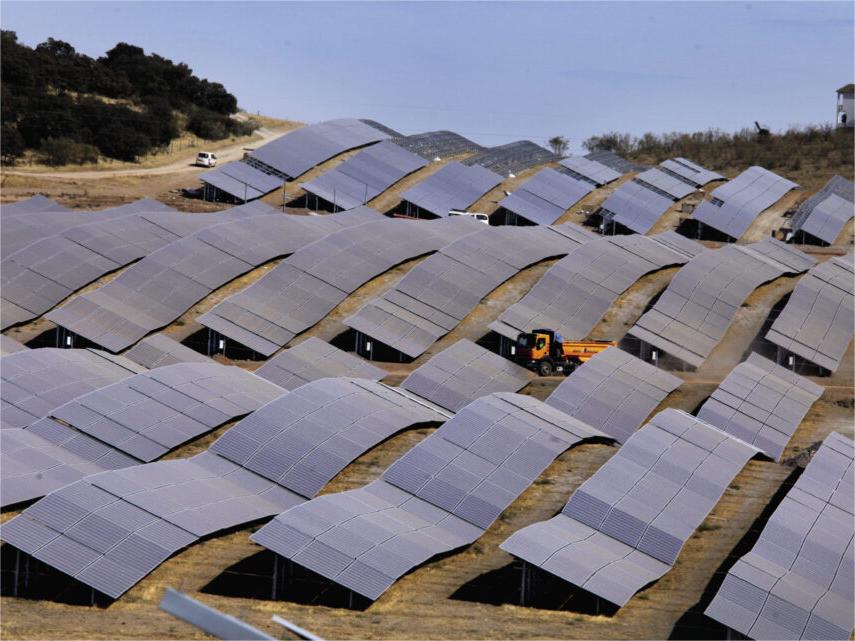
Germany and Spain continued to lead the EU market, while France, Italy, Poland, Romania and Greece also recorded moderate growth. Smaller markets such as Finland and Latvia saw faster expansion, mainly driven by large ground-mounted projects.
The market structure is expected to remain broadly stable in 2026, with ground-mounted solar accounting for around 56% of new capacity and rooftop solar 44%. Residential rooftop demand has weakened in several markets, while commercial and industrial solar has remained more resilient.
Solar is also playing a growing role in Europe's energy security. SolarPower Europe estimates that solar generation avoided around €30 billion in gas import costs for the EU during the six months following the escalation of the Middle East conflict on March 1.
Solar supplied more than 20% of EU electricity demand in May, June and July, reaching a record 25% in June and becoming the EU's largest electricity source that month.
Strong solar generation also helped meet higher cooling demand during summer heatwaves, while low water levels and high river temperatures reduced nuclear and hydropower output in some markets.
Rapid solar growth is also putting pressure on Europe's power infrastructure. Rising renewable curtailment, falling solar capture prices, more frequent negative electricity prices and evening price spikes show that grid, storage and flexibility investments are struggling to keep pace.
Without faster deployment of these technologies, Europe risks wasting low-cost solar power at midday while continuing to rely on expensive fossil-fuel generation when solar output declines.
SolarPower Europe's medium scenario forecasts 68.1 GW of new solar capacity in the EU in 2026. Its pessimistic and optimistic scenarios stand at 62 GW and 74.1 GW, respectively.
The final result will depend on market conditions in the second half of the year, as well as potential revisions to preliminary installation data. Meanwhile, weaker policy support, regulatory uncertainty and grid bottlenecks remain key risks to further solar growth.

Atualmente, é um dos maiores exportadores de produtos fotovoltaicos da China.
 Rede IPv6 suportada
 Português